U.S. forces conducted airstrikes against Iranian military targets Friday following a drone assault by Tehran on a commercial cargo vessel in the Strait of Hormuz, marking the first direct American military action against Iran since the two sides agreed to a fragile ceasefire earlier this month.
President Donald Trump swiftly condemned the incident, stating that Iranian forces launched at least four one-way attack drones at vessels transiting the strategic waterway. One drone struck the upper deck of a large cargo ship, causing damage but allowing the vessel to continue its journey. U.S. defenses downed the remaining three drones.
In a post on Truth Social, Trump described the attack as “a foolish violation of our Ceasefire Agreement.” When asked by reporters whether Iran would face consequences, the president replied, “You’ll find out.”
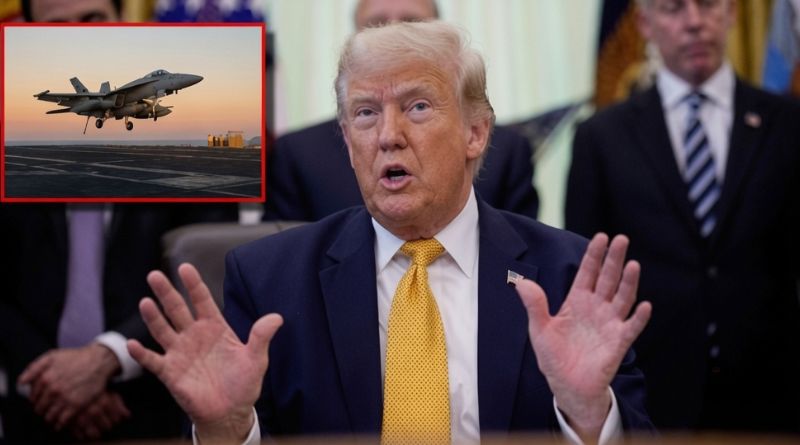
Hours later, U.S. Central Command confirmed precision strikes on Iranian missile and drone storage facilities as well as radar sites along the Strait of Hormuz and Qeshm Island. Six land-based American aircraft participated in the operation, which CENTCOM characterized as a “powerful response” to Iran’s “unwarranted aggression against commercial shipping.”
The drone strike targeted a Singapore-flagged vessel operating off the coast of Oman. Officials confirmed damage to the ship’s bridge, with no injuries or environmental harm reported. The incident occurred one day after Iran’s Persian Gulf Strait Authority warned that vessels deviating from designated Iranian routes would lack safe-passage guarantees and insurance coverage.
The exchange threatens to undermine the 14-point memorandum of understanding reached between Washington and Tehran. Under the temporary agreement, Iran committed to facilitating safe, toll-free passage through the Strait of Hormuz for 60 days while broader negotiations continue on Iran’s nuclear program and regional security issues.
Since the ceasefire took effect, commercial traffic through the vital chokepoint has increased significantly and global oil prices have eased. However, disagreements persist over shipping routes, with the U.S. favoring paths closer to Oman’s coastline and Iran insisting on routes nearer its shores. Tehran has also signaled potential tolls after the temporary period expires.
Vice President JD Vance, who has helped lead diplomatic efforts, defended the U.S. response. “Iran signed a ceasefire agreement. We have honored it,” Vance posted on social media. “If they have disagreements about how the memorandum of understanding is being applied, they can pick up the phone. But violence will be met with violence.”
The strikes introduce fresh uncertainty into ongoing negotiations as both sides work toward a more permanent accord.