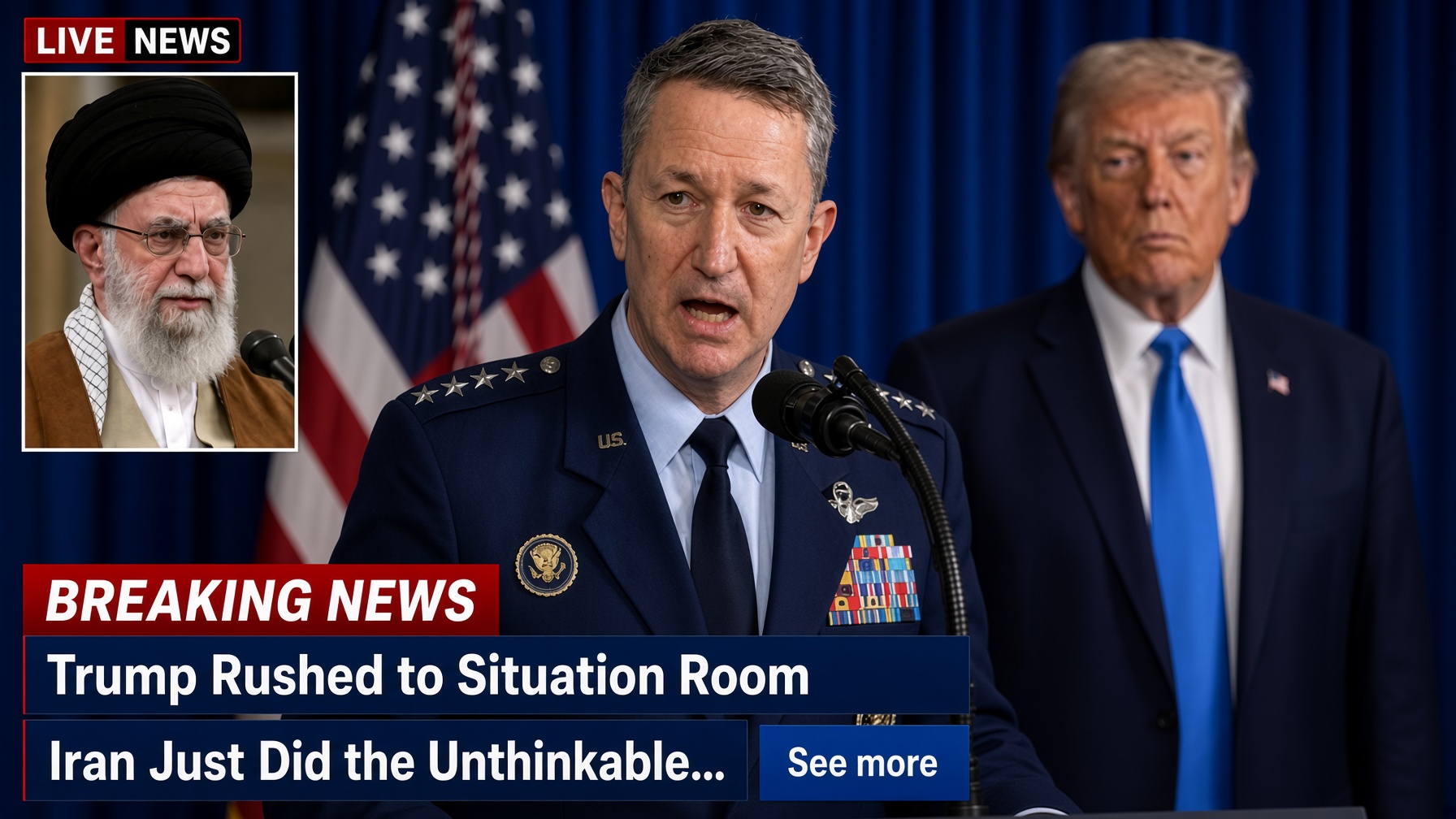
WASHINGTON — A new round of military escalation between Iran and the United States unfolded in late July after Iran’s Islamic Revolutionary Guard Corps launched multiple ballistic missiles toward U.S. forces in the Middle East, according to U.S. Central Command.
CENTCOM said the missiles were launched from Iranian territory on July 28 in what it described as an attempted surprise attack against American forces stationed across the region. U.S. officials said every Iranian ballistic missile involved in the attack was successfully intercepted. More than 50,000 U.S. service members were operating across the Middle East at the time and remained on heightened alert, according to CENTCOM.
The missile attack was followed by U.S. and Saudi military action against Iran-linked targets in Iraq, marking another expansion of the conflict beyond Iranian territory.
U.S. and Saudi Aircraft Strike Eastern Iraq
On July 28, U.S. Central Command said American and Saudi fighter aircraft conducted precision strikes against multiple logistics and weapons sites in eastern Iraq associated with Iran-aligned armed groups.
CENTCOM said the targets were connected to groups that the command says were directed by the IRGC to conduct attacks against U.S. forces and Saudi energy infrastructure. The strikes came after more than 30 drone attacks during the preceding 72 hours, according to the U.S. military.
The operation represented direct military cooperation between Washington and Riyadh in responding to attacks attributed by the United States to Iran-backed forces.
Saudi Arabia has faced its own security threats during the wider regional conflict. Reuters has reported that attacks by Iran-backed Houthi forces and other regional groups have threatened Saudi cities and energy infrastructure, while a September drone attack damaged pumping stations connected to the kingdom’s East-West oil pipeline.
CENTCOM Cites Hundreds of Earlier Attacks
In explaining the broader context for the July operation, CENTCOM said that more than 600 attempted attacks against U.S. citizens and facilities had been carried out by Iran-aligned militias in Iraq between February and April 2026.
The figure was part of the U.S. military’s justification for the strikes and should therefore be understood as a CENTCOM assessment rather than an independently established tally. The command said the attacks had been conducted by militias it described as aligned with Iran and that the groups were targeting American personnel and facilities.
The United States has repeatedly responded to attacks on its forces and commercial shipping with strikes against Iranian military infrastructure. Earlier in July, CENTCOM reported targeting Iranian air-defense systems, command-and-control networks, coastal radar installations, missile capabilities and IRGC vessels.
Washington Expands Military Response
The confrontation escalated further on July 29. CENTCOM announced that U.S. forces had completed a major wave of strikes directly against dozens of IRGC targets inside Iran.
The targets included military command centers, missile and drone facilities, coastal surveillance and defense sites, and maritime capabilities, according to the command. CENTCOM said the strikes were intended to reduce threats posed by Iran and affiliated groups to American forces, commercial shipping and neighboring Gulf countries.
The sequence illustrates the increasingly interconnected nature of the regional conflict: Iranian forces launched ballistic missiles at U.S. positions; American and Saudi aircraft struck Iran-linked infrastructure in Iraq; and U.S. forces subsequently conducted additional strikes against military targets inside Iran.
A Wider Regional Conflict
The confrontation is taking place alongside continued fighting and attacks across the Persian Gulf, Iraq, Yemen and the Strait of Hormuz. Commercial shipping has also been affected by the conflict, with the strategic waterway remaining a central point of military and economic concern. CENTCOM has previously reported multiple operations aimed at protecting commercial vessels and maintaining maritime access through the strait.
Saudi Arabia has simultaneously faced attacks from Iran-backed Houthi forces operating from Yemen. Reuters reported in September that missile and drone attacks had targeted areas around Riyadh and Saudi energy infrastructure, further increasing pressure on the kingdom as the broader regional conflict continued.
For Washington, the July attacks demonstrated that the conflict was not limited to direct exchanges between the United States and Iran. American forces remained exposed to threats from Iranian missiles as well as attacks by armed groups operating in neighboring countries.
For Tehran, the continued U.S. strikes represent a direct challenge to its military infrastructure and regional network of allied armed groups.
With attacks continuing across multiple fronts, the July missile exchange and subsequent U.S.-Saudi operations in Iraq became another significant episode in an expanding regional conflict—one in which military actions in Iran, Iraq, Saudi Arabia and the Gulf increasingly affect one another.