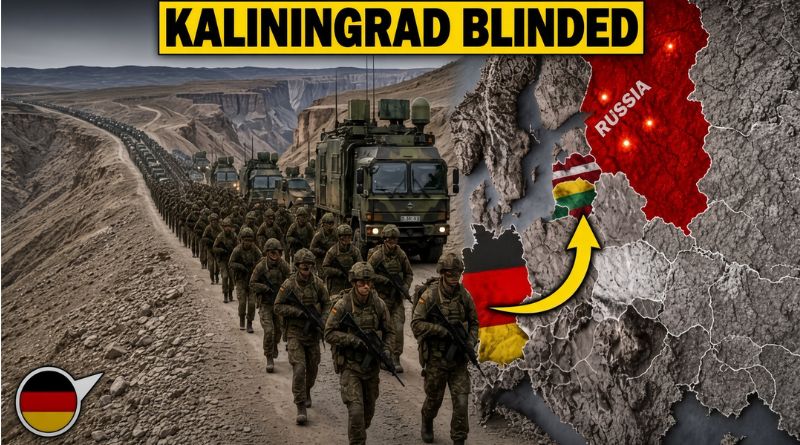
Germany’s deployment of Panzerbrigade 45 to Lithuania marks a significant development in NATO’s efforts to strengthen its eastern flank. The brigade is intended to establish a permanent German combat presence in Lithuania, reinforcing the alliance’s deterrence posture near Belarus and Russia’s Kaliningrad exclave. Its planned capabilities include modern armored vehicles, such as Leopard 2 tanks, alongside supporting infantry, artillery, logistics, and command elements.
Beyond conventional military equipment, electronic warfare is an important part of modern NATO defense planning. Germany’s Elektronische Kampfführung (EloKa) capabilities are designed to detect, analyze, and potentially disrupt hostile electronic emissions, including radar and military communications. These systems can help protect friendly forces, improve situational awareness, and complicate an adversary’s ability to coordinate operations. However, the claim that a German unit positioned two kilometers from the Belarusian border has already paralyzed Russian and Belarusian command centers is not substantiated by the information provided.
The Suwałki Gap remains a strategically important area because it connects Poland and Lithuania while lying between Belarus and Russia’s Kaliningrad region. NATO planners consider the area significant for reinforcing the Baltic states in a crisis. A stronger German presence in Lithuania could improve readiness, coordination, and the alliance’s ability to respond to potential threats.
Nevertheless, electronic warfare does not automatically disable an entire military network. Its effectiveness depends on equipment, terrain, frequency use, operational security, and countermeasures. Claims that Kaliningrad’s defenses have been neutralized or Belarus’s military threat has been eliminated should therefore be treated cautiously.
Overall, Germany’s brigade deployment and electronic warfare capabilities reflect NATO’s broader shift toward a more persistent, coordinated defense of its eastern members. The long-term impact will depend on sustained training, equipment readiness, logistics, and cooperation among allied forces.