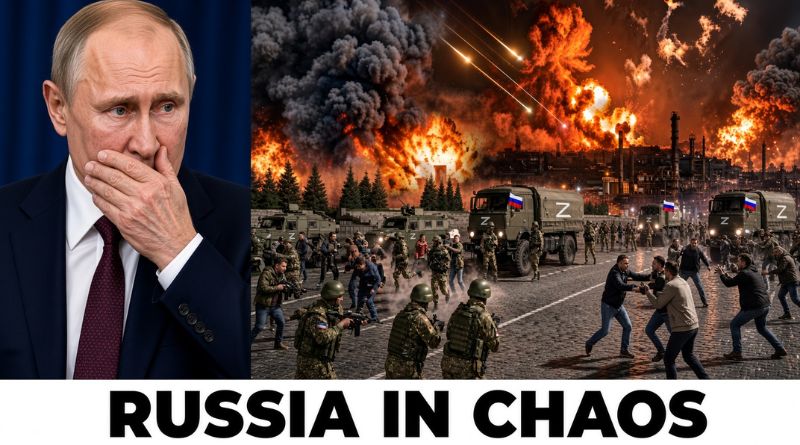
Ukrainian Strikes and Mounting Russian Casualties Intensify Pressure on Moscow
Ukraine’s long-range drone campaign reportedly struck the Ryazan Oil Refinery on November 5, triggering fires at one of Russia’s major fuel-processing facilities near Moscow. The refinery supplies gasoline, diesel, and aviation fuel to central Russia, including customers connected to the country’s military sector. Meanwhile, an explosion involving a gas transmission pipeline in Siberia has added to concerns about the resilience of Russia’s energy infrastructure.
The report also highlights mounting Russian battlefield losses. Ukraine’s General Staff claimed that Russian forces suffered approximately 2,500 casualties on November 1, while its figures for October placed total killed and wounded at around 54,400. These figures have not been independently verified and should be understood as Ukrainian military estimates.
Political and economic pressures are also receiving attention. Former Russian president Dmitry Medvedev reportedly acknowledged the scale of drone attacks affecting Bryansk, while Communist Party leader Gennady Zyuganov warned about the growing share of government resources consumed by military spending.
Across the wider conflict, Russian attacks have continued to damage Ukraine’s energy infrastructure, contributing to blackouts in Kyiv. Ukrainian forces, meanwhile, are targeting Russian logistics, industrial facilities, and military positions. NATO’s Eastern Sentry initiative and discussions about a European drone-defense network further demonstrate how the war is reshaping regional security planning.
Together, these developments highlight the growing military, economic, and infrastructure costs facing both countries as the conflict continues.